Math K - Saxon 1 - Learning Options
Filter
6 Products
6 Products
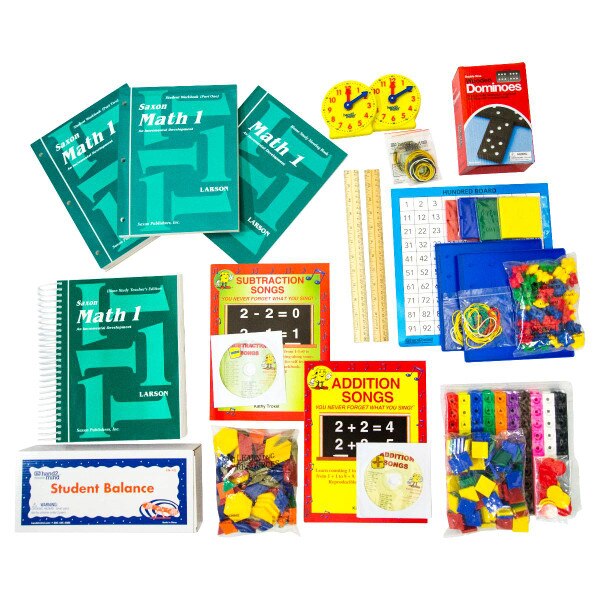
Math K - Saxon 1 - Learning Options
Saxon 1 is recommended for your kindergartener. While, it’s labeled as the first grade curriculum, for over 20 years we have successfully recommended and used the curriculum at this level.
Format: See Tabs Below
MATH K - SAXON 1 IS A YEAR-LONG COURSE FOR STUDENTS IN GRADES K-1
Saxon 1 is recommended for your kindergartener. While, it’s labeled as the first grade curriculum, for over 20 years we have successfully recommended and used the curriculum at this level. We’ve found the kindergarten level to be substantially picked up through routine parental and sibling interactions. What might not have been achievable will be easily learned using Saxon 1. This year learning includes skip count by one's, two's, five's and tens, identify ordinal position to tenth, master all basic addition and subtraction facts, measure using inches, feet, and centimeters. Math K - Saxon 1 is only available in You Teach format.
The Veritas Approach to Math
Unlike some classical educators, we believe math is a crucial subject. It’s necessary for a well-rounded, rigorous classical education. In the grammar years, math provides content for developing memorization tools. In the dialectic years, subjects like Algebra I and Geometry develop students’ reasoning skills. In the rhetoric years, Pre-calculus, Calculus, Statistics, and Business Math lead students to value math in real-world applications.
At Veritas, we’re convinced that math has been dumbed down in America.١ Most students are more capable than we think. Our mission is to help make sure your children don’t become a dismal math statistic. For more than 25 years, we’ve been proving that our math standards shouldn’t come from what we were raised with. After all, if the education we ourselves received was as education should be, why would we be doing something different for our children? A study of historical٢ and international math standards helps us see this clearly.
Maybe the best way to understand our approach is to mark some milestones.
Grade | Milestone | Purpose Served |
K | Addition and subtraction facts | Math building blocks, develop memorization skills |
1st | Multiplication facts | Additional building blocks |
2nd | Division facts | Additional building blocks |
7th | Algebra I | Problem-solving, reasoning, logic |
11th or 12th | Calculus I | Mapping change, thinking numerically, living today٣ |
Veritas recommends Saxon Math for K–6th, Jacobs for Algebra I and Geometry, Foerster for Algebra II and Pre-Calculus, and Larson for Calculus.
Saxon, with its incremental advances and continual review, works best with the grammar stage. Thankfully, Harold Jacobs understands the dialectic student and has written a superb curriculum for them with Algebra I and Geometry. One of his former students, Paul Foerster, writes where Jacobs left off, providing us our favorite texts for Algebra II and Pre-Calculus. Finally, Larson, a most prolific producer of Calculus texts, provides the capstone to our math curriculum.
Some prefer to stick with Saxon into the secondary school years. We are fine with that—even offering live class options using Saxon—but prefer texts written with more of a classical pedagogical approach.
Today, all math education needs to address the use of technology. At Veritas, it’s simple: use technology as a tool, not a crutch. Learning to work a two-variable algebraic equation is important. When mastered, however, why waste time plugging and chugging the numbers to develop a graphing solution? Let a machine do the number crunching. Students simply need to know how to do it.
Math is crucial to classical education. Don’t let anyone tell you otherwise.
١Americans are lagging in math: http://www.pewresearch.org/fact-tank/2017/02/15/u-s-students-internationally-math-science/
٢A Brief History of American K-12 Mathematics Education: https://www.csun.edu/~vcmth00m/AHistory.html
٣Is Calculus necessary? http://www.math.harvard.edu/~knill/pedagogy/use/index.html


HOW TO TEACH
HOW TO TEACH SAXON MATH IN GRAMMAR SCHOOL
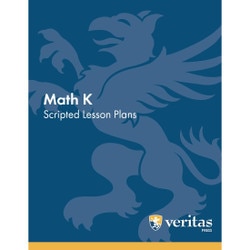
Math K - Saxon 1 - Lesson Plans
Have you ever wished for more help as you teach, plan and organize your Math curriculum? Veritas Saxon 1 Kindergarten Math Scripted Lesson Plans are the answer!
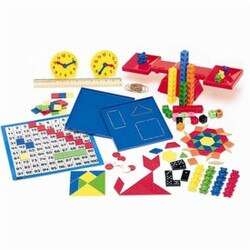
Saxon Math K-3 Home Study Manipulatives Kit
The Saxon Math K-3 Home Study Manipulatives Kit contains the hands-on tools you will need for introducing and reinforcing concepts covered in Saxon1, 2, and 3. Take full advantage of hands-on learning to reinforce and master math!
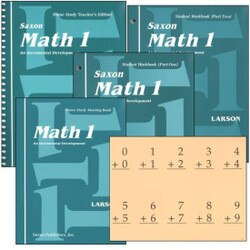
Saxon Math 1 Home Study Kit
The friendliest and most thorough math program available, Saxon uses incremental advances and continual review to allow any student to master the grammar of math easily. The Saxon Math 1 Home Study Kit, a great choice for learners of kindergarten age, includes the teacher's manual...
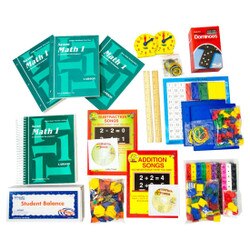
Math K - Saxon - You Teach Kit
The course kit includes all the materials for the teacher and a student for teaching math in kindergarten, our Math K...